


 Deutsch
 English
 Español
 Français
 Nederlands
 Português


 Share
Share




The 2026 Supply Chain Revolution: How Geopolitical Fragmentation is Forcing Permanent Trade Architecture Redesign
January 2026 marks a watershed moment in global trade architecture, where geopolitical tensions have moved from temporary disruptions to permanent structural changes that are fundamentally reshaping how businesses operate worldwide. According to the latest UNCTAD Global Trade Update and Thomson Reuters 2026 Global Trade Report, 72% of trade professionals now view U.S. tariff volatility as a permanent feature rather than temporary policy, forcing companies to fundamentally restructure operations through nearshoring (51%), supplier diversification (65%), and strategic inventory management. This represents a strategic inflection point where trade resilience has overtaken efficiency as the primary corporate objective, with 68% of professionals making supply chain management their top priority - nearly double from previous years.
What is the 2026 Supply Chain Revolution?
The 2026 Supply Chain Revolution refers to the fundamental restructuring of global trade architecture driven by geopolitical fragmentation, where companies are abandoning decades-old just-in-time models for resilient, multi-hub operations. This transformation represents a complete paradigm shift from efficiency-first approaches to resilience-focused strategies that can withstand geopolitical shocks, tariff volatility, and supply chain disruptions. The revolution is characterized by three core elements: permanent tariff regimes, South-South trade reconfiguration, and strategic inventory management becoming standard practice rather than emergency measures.
The Data Behind the Transformation
January 2026 UNCTAD data reveals ten major trends reshaping global trade, while Thomson Reuters reports supply chain concerns have doubled year-over-year, indicating we've reached a critical inflection point. The convergence of UNCTAD data showing South-South trade reaching 57% of developing-country exports with McKinsey's findings on trade geometry shifts is creating new corridors that bypass traditional Western hubs. 'We're witnessing the most significant restructuring of global trade since the establishment of the WTO,' notes a senior UNCTAD analyst. 'Companies that fail to adapt to this new reality risk becoming obsolete within their own industries.'
Key Structural Changes in 2026 Trade Architecture
1. Nearshoring Acceleration (51% Adoption)
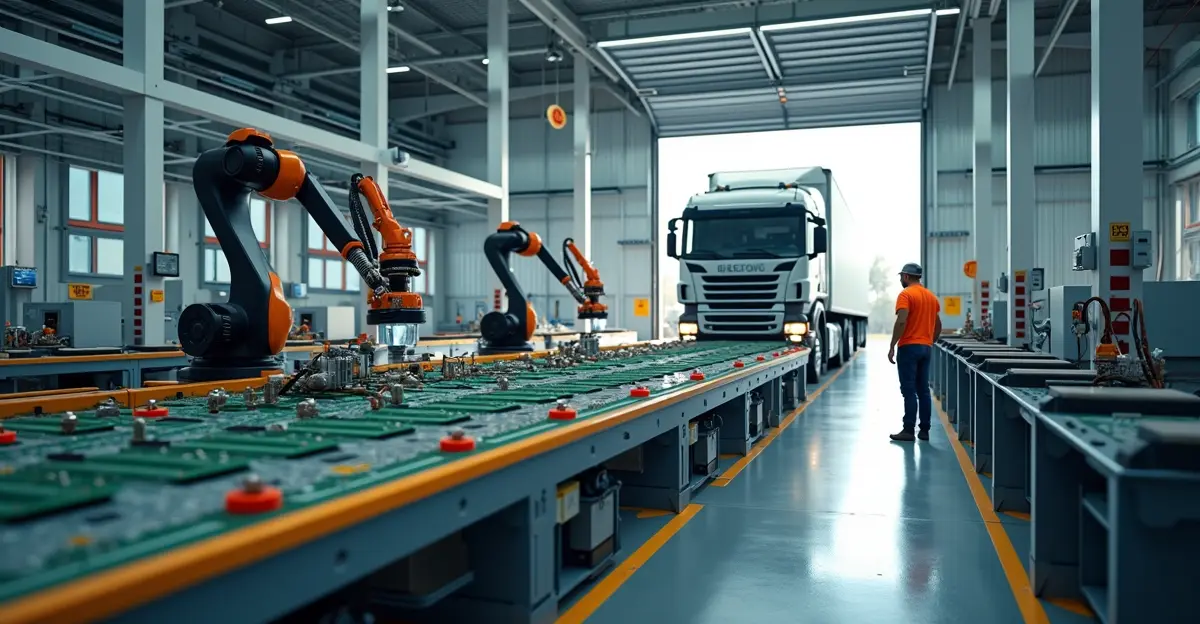
The Thomson Reuters report reveals that 51% of companies are actively pursuing nearshoring or moving manufacturing closer to end markets. This represents a dramatic shift from the globalized supply chains that dominated the past three decades. Companies are establishing regional manufacturing hubs to reduce geopolitical exposure and transportation risks, with particular focus on North American and European regionalization.
2. Supplier Diversification (65% Implementation)
With 65% of companies changing sourcing patterns, businesses are systematically reducing dependency on single-source suppliers, particularly those concentrated in geopolitically sensitive regions. This diversification strategy extends beyond simple backup suppliers to include multi-tiered sourcing networks that can pivot quickly in response to tariff policy changes or geopolitical events.
3. Strategic Inventory Management
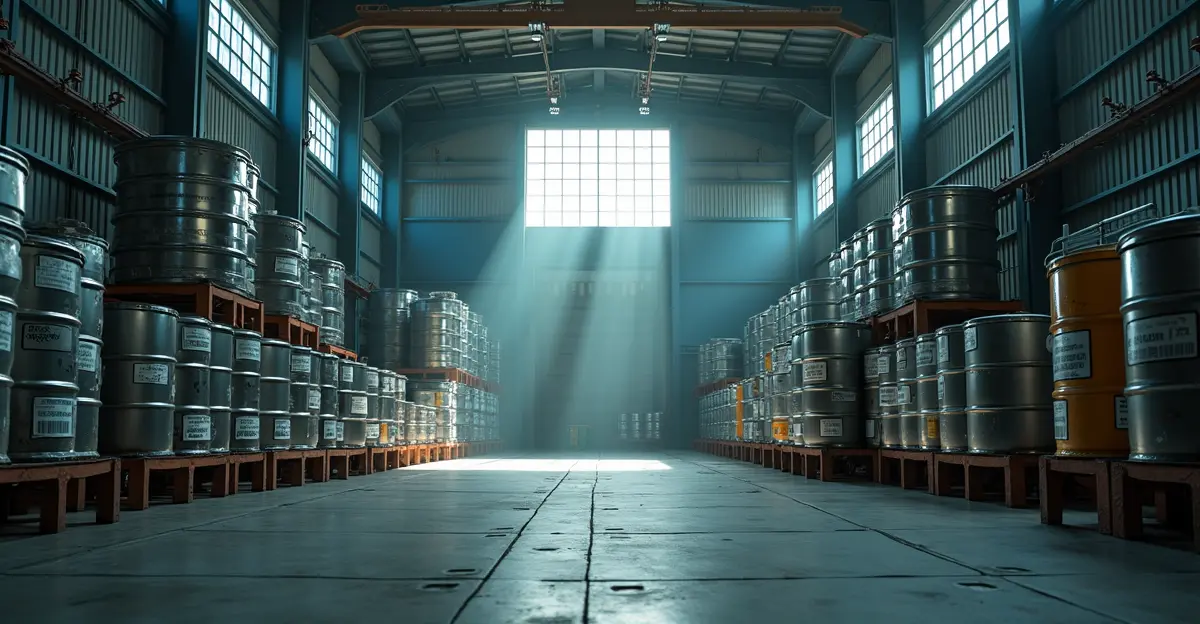
Once considered inefficient, strategic inventory buffers have become standard practice as companies recognize that the cost of stockouts now far exceeds the cost of holding additional inventory. The World Economic Forum notes that companies are moving from 'just-in-time' to 'just-in-case' models, with safety stock levels increasing by an average of 35% across industries.
South-South Trade: The New Global Trade Geometry
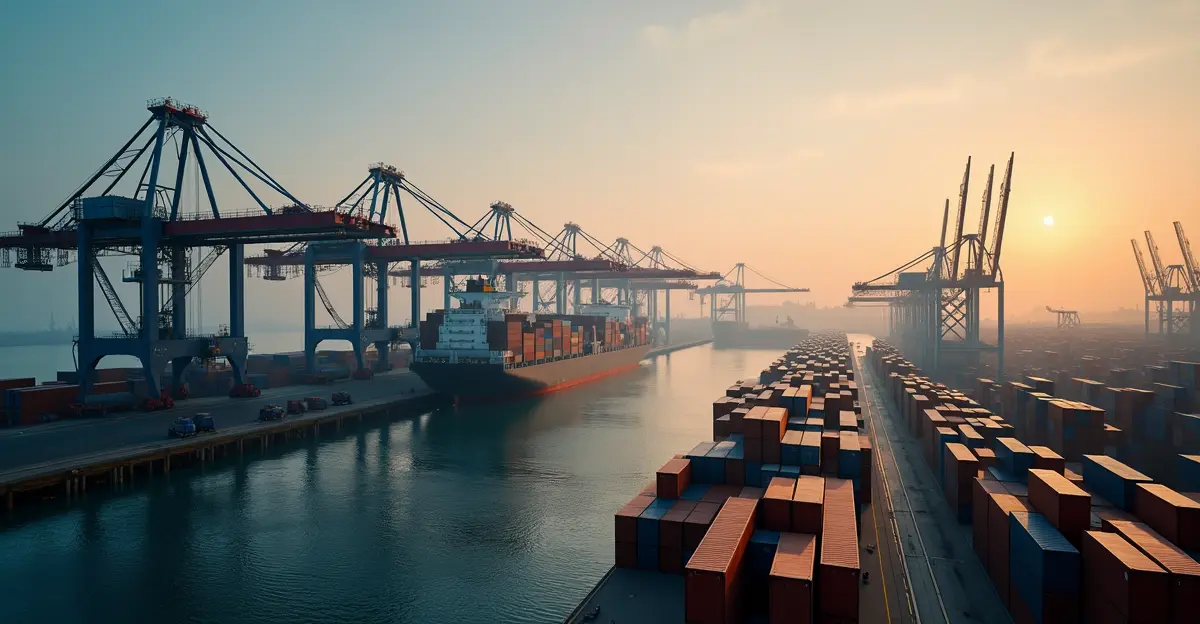
The most significant structural shift identified in the 2026 data is the dramatic rise of South-South trade, which now accounts for 57% of developing-country exports. This represents a fundamental reconfiguration of global trade flows, with emerging economies increasingly trading with each other rather than primarily with developed Western nations. 'We're seeing the emergence of new trade corridors that bypass traditional hubs like Rotterdam and Singapore,' explains a logistics expert. 'Trade between India and Africa, Brazil and Southeast Asia, and Middle Eastern connections with Central Asia are growing at unprecedented rates.'
Impact on Corporate Strategy and Operations
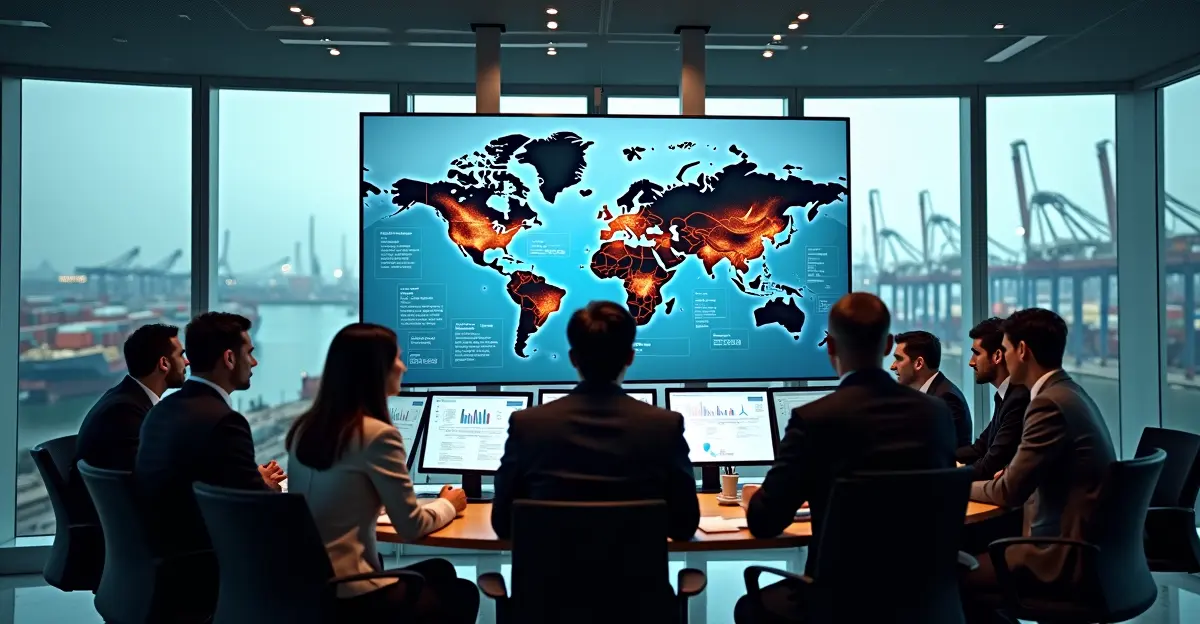
The 2026 supply chain revolution is forcing companies to make fundamental changes to their strategic planning and operational execution. With 68% of professionals making supply chain management their top priority - nearly double from previous years - organizations are elevating supply chain leadership to C-suite positions and integrating geopolitical risk assessment into core business planning. The digital transformation of trade is accelerating dramatically, with 40% of companies exploring emerging technologies like AI or blockchain compared to just 6% in 2024, according to Thomson Reuters data.
Expert Perspectives on the Permanent Shift
Industry leaders emphasize that this represents a permanent rather than temporary transformation. 'The data clearly shows that 76% of trade professionals view current U.S. tariffs as a permanent approach to trade that will persist for at least four years,' states the Thomson Reuters report. This perception of permanence is driving fundamental restructuring rather than temporary adjustments. Supply chain experts warn that companies clinging to pre-2026 models risk severe competitive disadvantage as the global economic architecture continues to fragment along geopolitical lines.
Future Outlook: Building Resilience in a Fragmented World
Looking ahead to 2027 and beyond, the 2026 supply chain revolution establishes new baselines for global trade. Companies must develop capabilities in three key areas: geopolitical intelligence gathering, flexible manufacturing networks, and digital supply chain integration. The KPMG analysis emphasizes the shift from resilience to 'Total Value' - integrating customer-centric operations with measurable outcomes across financial, operational, and sustainability dimensions. As the green transition accelerates, environmental considerations will increasingly intersect with geopolitical factors in supply chain decision-making.
Frequently Asked Questions (FAQ)
What percentage of trade professionals view U.S. tariff volatility as permanent?
According to the 2026 Thomson Reuters Global Trade Report, 72% of trade professionals now view U.S. tariff volatility as a permanent feature rather than temporary policy, up from 41% the previous year.
How many companies are pursuing nearshoring strategies in 2026?
51% of companies are actively pursuing nearshoring or moving manufacturing closer to end markets as part of their supply chain restructuring efforts.
What percentage of developing-country exports now flow South-South?
UNCTAD data shows that South-South trade now accounts for 57% of developing-country exports, representing a major shift in global trade patterns away from traditional North-South flows.
Why has supply chain management become the top priority for professionals?
68% of trade professionals now make supply chain management their top priority - nearly double from previous years - due to the recognition that resilience has overtaken efficiency as the primary corporate objective in a geopolitically fragmented world.
How long do experts expect current trade fragmentation to last?
76% of professionals view current tariff regimes and trade fragmentation as a permanent approach that will persist for at least four years, driving fundamental rather than temporary restructuring.


Follow Discussion